

How Mastering Game Audio Transforms Competitive Performance
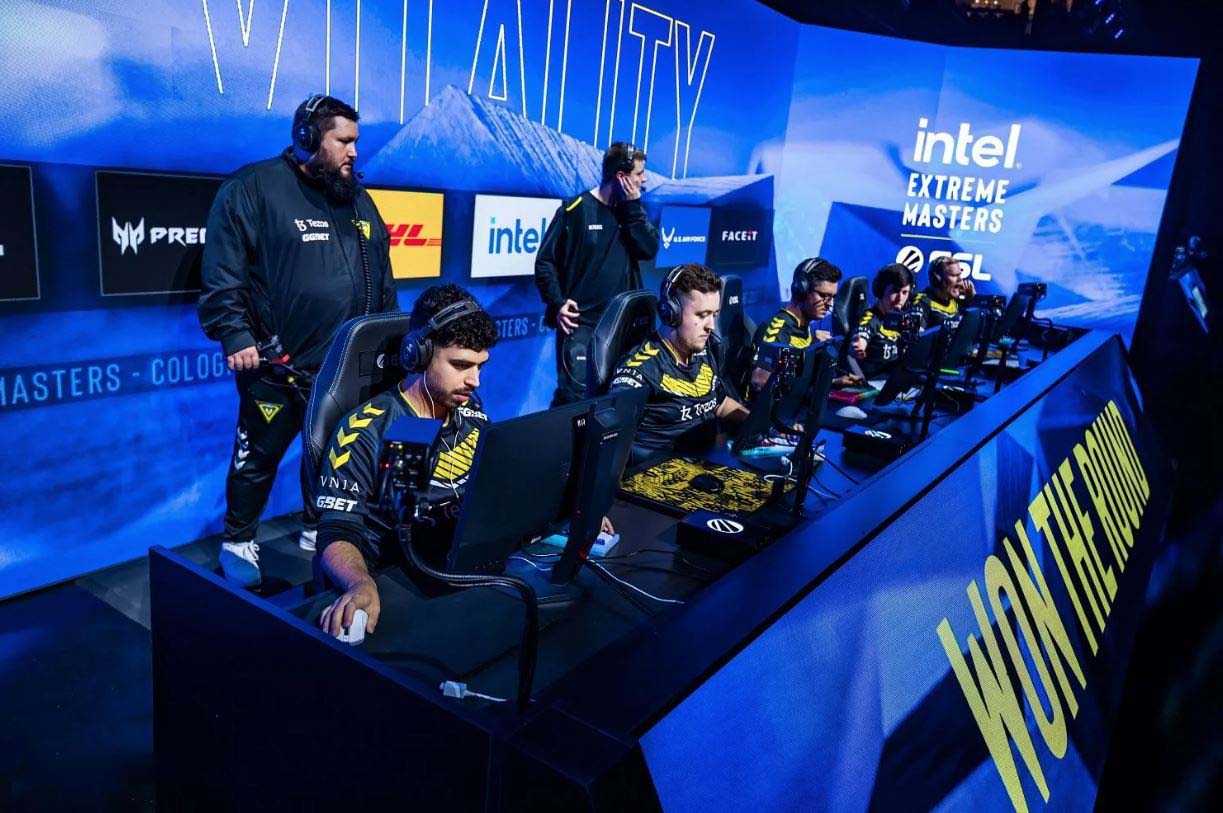
Uncovering the Hidden Power of Sound Design, Awareness, and Acoustic Strategy in Professional Esports
The Unseen Dimension of Competitive Gaming
When most people think about what defines success in esports, they picture reflexes, mechanical skill, or team coordination. Yet, hidden beneath the visual spectacle of flashing lights and rapid movements lies another crucial layer of performance: sound. In competitive gaming, audio is not merely background noise, it is an information system that guides perception, reaction, and strategy. Every footstep, gunshot, reload, and environmental cue carries meaning. Professional players often describe the ability to interpret these sounds accurately as the difference between victory and defeat. This auditory intelligence forms a silent foundation upon which many of the greatest plays in esports history have been built.
Sound design in games has evolved from a simple aesthetic choice into a fully functional competitive mechanic. Developers now craft soundscapes that balance realism with clarity, ensuring that players can rely on auditory feedback to make critical split-second decisions. Modern engines simulate acoustic depth, directional accuracy, and spatial awareness, giving sound the power to shape gameplay in ways that visuals alone cannot achieve. For elite competitors, understanding and leveraging these sonic cues becomes an art form, one that demands both discipline and finely tuned perception.
Sound Design as a Strategic Tool
Sound designers play a role in esports that often goes unnoticed but is fundamental to how games are played competitively. Every layer of sound, from ambient background tones to high-impact effects, serves a purpose. The goal is not only to immerse players in a believable world but to give them reliable auditory feedback about their surroundings. In a game like Counter-Strike, for instance, the sound of footsteps or weapon reloads provides tactical information about enemy positioning. Developers must fine-tune these sounds to ensure they are distinct, consistent, and balanced across different environments. Too much detail can overwhelm players, while too little can remove strategic depth.
Competitive sound design also involves deliberate limitation. Certain frequencies are emphasized to ensure clarity, while others are suppressed to avoid confusion. This balance creates an acoustic language that players learn to interpret instinctively. For example, a faint metallic clink might indicate a grenade pin being pulled, while a muffled scuffle could hint at movement behind a wall. In fast-paced environments where every fraction of a second matters, the ability to recognize and react to these sounds becomes a form of real-time intelligence. Professional teams even study specific sound patterns, incorporating them into playbooks that dictate positioning, movement, and timing.
The Role of Headphones and Audio Equipment in Competitive Advantage
In esports, hardware can be as decisive as skill. Headphones designed for competitive play prioritize accuracy over aesthetic sound quality. Unlike consumer models that enhance bass or emphasize cinematic richness, professional-grade headsets focus on spatial precision. They allow players to pinpoint the direction, distance, and elevation of sounds with remarkable accuracy. This directional awareness enables players to anticipate ambushes, track opponents through walls, and coordinate movements with teammates. The smallest auditory detail can shift the balance of an entire round, making high-quality audio equipment a critical investment for professionals.
Technological advancements have taken competitive audio to new heights. Virtual surround systems, 3D sound mapping, and personalized equalization profiles help players customize their listening experience. Some teams work with audio engineers to fine-tune sound output based on individual hearing sensitivities. This level of customization turns audio awareness into a measurable competitive edge. Moreover, consistent calibration ensures that what players hear in practice matches what they hear in competition, maintaining muscle memory and reaction timing. Just as a racing driver trusts their car, an esports player must trust the accuracy of their sound environment.
Psychological Impact of Audio Cues in Competitive Scenarios
Sound not only conveys information but also shapes the emotional and psychological state of players. Audio cues can heighten alertness, induce stress, or create confidence depending on how they are perceived. The subtle crescendo of footsteps approaching or the tension of a countdown timer can trigger adrenaline responses that sharpen focus but also test composure. Professional players learn to manage these auditory stressors, using breathing control and mental conditioning to remain calm under pressure. In contrast, inexperienced players often succumb to the psychological manipulation embedded in sound design, reacting impulsively instead of strategically.
Developers understand this psychological dimension and use it intentionally. The pacing of sounds influences how players perceive time and urgency. For example, a slow heartbeat effect might accompany low health status, amplifying anxiety and forcing deliberate decision-making. In team-based games, communication sounds such as confirmation beeps or radio static reinforce teamwork and synchronization. The ability to remain emotionally stable despite these sound-driven pressures is one of the hallmarks of top-level competitors. It demonstrates that mastery in esports is not only about reaction speed but also about emotional intelligence shaped through sound.
How Audio Awareness Shapes Team Coordination
In team-based esports, communication is the lifeblood of success. Sound awareness enhances this coordination by providing shared reference points for strategy and timing. Players use auditory cues to synchronize movements without relying solely on verbal communication. A well-timed sound can signal an attack, retreat, or setup, allowing teams to act in unison even under chaotic conditions. For example, the sound of a smoke grenade or ability activation can serve as an unspoken signal for teammates to reposition or execute a plan. When everyone on a team interprets these cues consistently, gameplay becomes fluid and instinctive.
Teams often undergo audio-specific training to refine their collective awareness. Scrimmages may include sessions focused exclusively on sound-based decision-making. Coaches use audio replay tools to analyze moments where communication broke down due to missed or misinterpreted cues. These training methods highlight that effective teamwork extends beyond verbal coordination to include shared auditory intelligence. The best teams cultivate what psychologists call "sonic trust," a mutual confidence that every member can interpret and respond to sound cues accurately. This trust transforms teams into unified systems capable of executing complex strategies with minimal hesitation.
Environmental Soundscapes and Spatial Awareness
Competitive maps and arenas are more than just visual spaces, they are acoustic environments designed with purpose. Game developers carefully craft these soundscapes to support immersion while maintaining fairness. For instance, surfaces produce different footstep sounds based on material type, allowing players to infer location and movement patterns. Enclosed spaces amplify sounds differently from open areas, helping players gauge proximity. In advanced engines, reverb and occlusion systems simulate how sound behaves in real-world conditions, creating authentic auditory environments that enhance strategic depth.
Spatial awareness derived from these soundscapes is critical for players operating at professional levels. They memorize how specific areas of a map "sound" under various conditions, creating an internal acoustic map that complements visual memory. This dual-layer awareness allows players to make split-second predictions about unseen events. When a sound echoes differently or fails to appear, it can signal that an enemy has changed position or taken an alternative route. The ability to translate these environmental subtleties into actionable insights separates amateurs from experts, turning hearing into an active sense of direction and prediction.
Balancing Game Audio for Fair Play
While audio serves as a powerful tool for strategy, it must be balanced to ensure fairness across all competitors. Developers face the challenge of designing soundscapes that reward skillful listening without creating imbalances that favor certain playstyles. Competitive integrity demands that no single sound provides excessive advantage or confusion. To achieve this, studios conduct extensive testing with professional players, refining volume levels, frequency ranges, and directional mixing. The result is a system where awareness, not luck, determines success.
Accessibility is another important factor in this balance. Developers incorporate features like customizable equalizers, visual sound indicators, and hearing assistance modes to support players with varied auditory capabilities. These features uphold inclusivity without compromising competition. As esports grows, the ethical design of sound systems will continue to evolve, ensuring that every player competes on equal auditory footing. In doing so, the industry reinforces its commitment to both technological innovation and fair play, two principles that define the spirit of modern gaming.
Adapting Sound Design for Different Game Genres
Each esports genre presents unique challenges for sound design. In first-person shooters, precision and directionality are paramount. Audio cues such as footsteps, weapon reloads, and environment interactions guide tactical movement. In contrast, real-time strategy games emphasize clarity of interface sounds, ensuring players can distinguish alerts, unit commands, and enemy actions amid complex visual chaos. Fighting games rely on rhythmic impact sounds to signal timing and openings, while racing titles use engine tones and tire friction as feedback for control and pacing. The adaptability of sound design across these genres underscores its universality as a competitive tool.
Developers must balance realism with gameplay clarity. Too much realism can clutter the soundscape with unnecessary noise, while too little can reduce immersion. Successful design prioritizes utility above aesthetics. Every audible element must serve a functional purpose that aids decision-making. This utilitarian philosophy has shaped the evolution of sound design as an extension of interface design, blurring the boundary between art and mechanics. It is a reminder that in esports, audio is not an afterthought but a primary channel of communication between player and game.
Training the Ear: Developing Audio Intelligence
Professional gamers train their ears with the same dedication athletes apply to physical conditioning. Audio training involves repetition, pattern recognition, and sensitivity calibration. Players practice identifying specific sounds under pressure, such as differentiating footsteps through walls or predicting weapon reloads. Some organizations use specialized software that isolates frequencies and directional cues to enhance auditory reflexes. The goal is to develop instinctual responses where recognition and reaction occur simultaneously. This heightened awareness allows players to act before their conscious mind fully processes the information, creating an almost intuitive connection between hearing and movement.
Teams also integrate audio into cognitive training programs. Exercises may involve listening to simulated match scenarios while blindfolded, forcing players to navigate environments using only sound. This practice sharpens mental mapping and focus. Over time, it builds confidence in auditory cues, reducing dependency on visual stimuli. The result is a player capable of operating effectively even when visibility is compromised. Audio intelligence becomes a cornerstone of adaptability, enabling players to remain composed and efficient under unpredictable conditions. It exemplifies how human skill evolves alongside technology in the competitive arena.
The Future of Competitive Audio in Esports
As technology continues to advance, the future of competitive audio promises unprecedented levels of immersion and complexity. Innovations such as haptic feedback synchronization, AI-driven soundscapes, and real-time acoustic simulation are already emerging. These technologies will allow players to experience sound as a fully interactive dimension, where every action produces nuanced auditory consequences. Artificial intelligence may one day analyze player hearing patterns to generate personalized sound environments optimized for competitive performance. Virtual reality platforms are also pushing boundaries, requiring entirely new paradigms of spatial sound design to maintain both fairness and realism.
The integration of cutting-edge audio will not only enhance gameplay but also enrich spectator experiences. Audiences could soon enjoy interactive broadcasts with adaptive sound mixing that mirrors professional headsets, allowing fans to perceive matches as players do. This evolution will deepen appreciation for the artistry and precision of sound in esports. Ultimately, the science of audio awareness reflects the essence of competition itself: the relentless pursuit of perfection through understanding, adaptation, and mastery. As esports continues to evolve, sound will remain its most powerful and least visible weapon, guiding players through silence toward victory.